
Meadow in Motion: A Story of Light, Place and Renewal
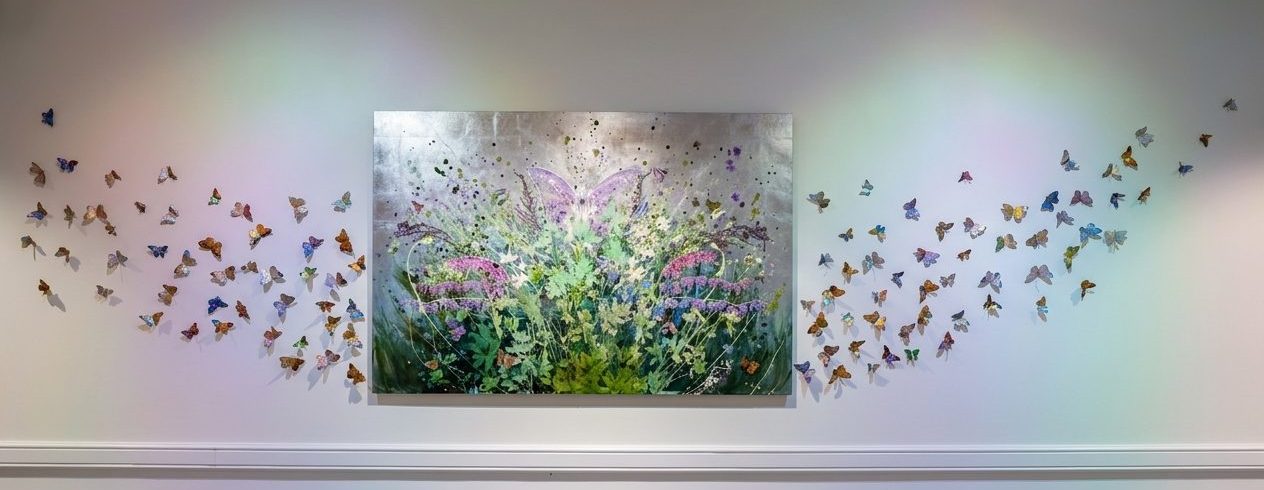
The first thing visitors notice as they come down the stairs when they enter the new Clubhouse at The Woods is the way the light seems to shift—dancing, settling and shimmering across a sweeping expanse of wall. And then they realize it isn’t the light that’s moving at all, but Meadow in Motion, an immersive installation by artist Cara Enteles, whose work captures the quiet electricity of the natural world.
At the heart of the piece is a large aluminum panel oil-painted with a lush, glowing cluster of wildflowers and grasses used from her garden. The central image feels almost illuminated from within—greens, golds, soft purples and pale light blending into one another with an ethereal softness. With no natural light entering the space, Cara left portions of the silver aluminum exposed, sanding them to catch the ambient glow of the overhead lighting as well as the shifting reflections created by people moving through the hallway. Under these changing light conditions, the artwork subtly transforms throughout the day—its metallic underlayers brightening, the grasses softening in tone, and emerging shadows revealing new details—so each passerby experiences a slightly different visual moment.
The panel becomes a living presence, echoing the way nature’s light is never still.
From this glowing meadow, more than a hundred butterflies burst outward, extending across the wall in two sweeping arcs—one stretching left, one right. Each butterfly is handcrafted from upcycled aluminum cans: brown and copper root beer and wheat beer cans, pale green seltzers, shimmering silvers, and the soft lavender of blueberry seltzer. Sanded, painted, and sculpted into three‑dimensional forms, they shimmer as people pass, catching the light and creating the sensation of wings in motion. At the bottom of the installation, the butterflies are larger and richer in tone; higher up, they become smaller and lighter, disappearing into the air like creatures lifting toward the sky.
This sense of emergence—from meadow to flight—is what gives the piece its name, Meadow in Motion. It is not merely a painting but a landscape that expands beyond its frame, a moment of transformation frozen and unfrozen at once.
The Space That Holds the Art
The Clubhouse at The Woods, a 24,000‑square‑foot gathering place for residents of Cornwall Manor, is designed to be both modern and deeply connected to the land on which it stands. With geothermal heating and cooling, indoor and outdoor dining, an auditorium, therapy and exercise spaces, and inviting areas for recreation and conversation, the Clubhouse reflects Cornwall Manor’s philosophy: to honor the past while building thoughtfully for the future. Designed by Cornerstone Design Architects and constructed by Pyramid Construction Services, this new space serves as an anchor for community life for all residents at Cornwall Manor.
It stands in Cornwall, Pennsylvania—a borough shaped by one of the country’s most remarkable industrial histories. Once home to the world’s largest open‑pit iron mine, Cornwall is known for its 18th‑century iron heritage and its National Historic Landmark, the Cornwall Iron Furnace. The landscape here has shifted from forge fires and extraction to forests, quiet neighborhoods, and preserved historic buildings. Nature, with patience and persistence, reclaimed much of what industry once carved away.
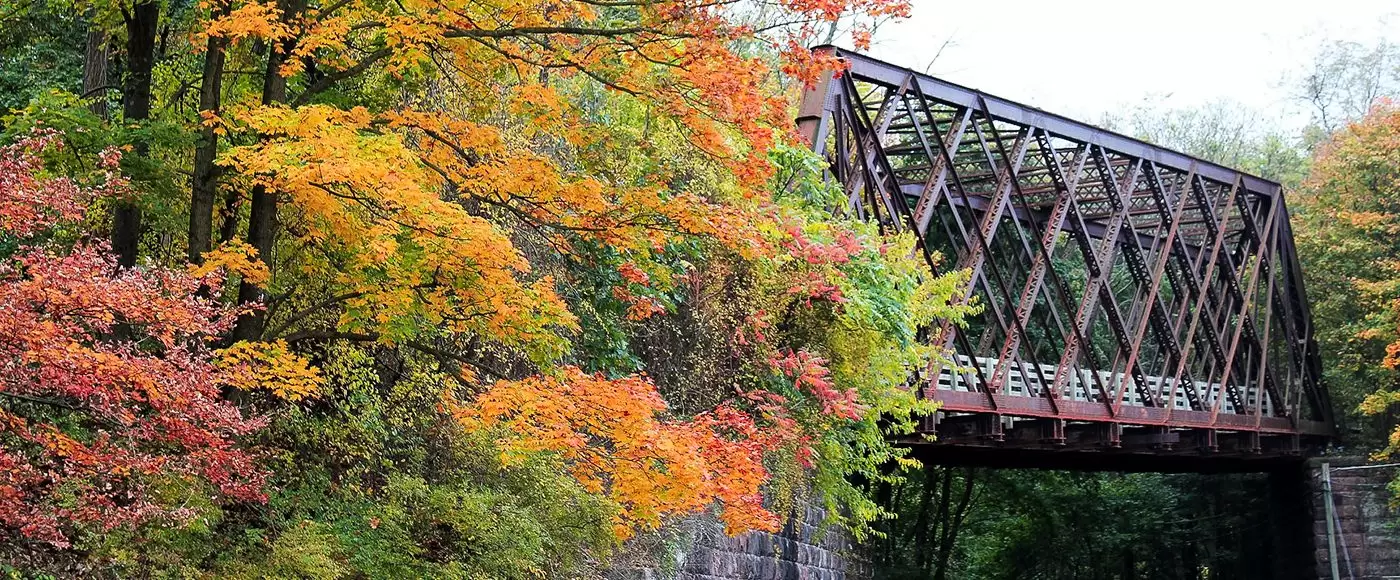
Today, that reclaimed landscape is knit together by the Lebanon Valley Rail Trail—a former rail corridor repurposed into a walking and biking trail that runs through Cornwall and continues south toward the Lancaster County line. Built on segments of the historic Cornwall–Lebanon Railroad, the trail brings people directly through the heart of this once‑industrial region, passing just south of the Cornwall Iron Furnace and connecting with wooded paths, farmlands, and local communities along its route. As it intersects the Cornwall Manor campus, the trail represents both continuity and renewal: a gentle corridor where history, landscape, and daily life meet.
For Cara, this history of reclamation became central to the work.
A Gift Rooted in Love for Art and Community
Meadow in Motion was made possible through the generosity of Kathryn Lillie, who sponsored the artwork in honor of parents Robert and Mary. All three shared deep connections to Cornwall Manor, forming lasting ties within the community over many years. A committed member of the Artful Connections Art Council, Kathryn believed strongly that art enriches both individual lives and the collective spirit of a place.
Her family offered a guiding hope for all who encounter the installation:
“We hope this unique artwork will uplift and inspire all who experience it—Cornwall Manor residents, staff and visitors alike.” —The Lillie Family
Their support reflects a heartfelt love of both art and Cornwall Manor—a belief that beauty should live in the shared spaces where people gather, connect, and feel at home. This piece stands not just as a work of art, but as a tribute to the Lillie family’s enduring connection to this place and their desire to inspire generations of residents to come.
The Artist and Her Inspiration
Cara Enteles is celebrated for her nature‑based paintings on aluminum and Plexiglas, with works displayed across the United States and Europe. She has completed major public art commissions—including a large-scale installation for the MTA Arts & Design program— and her paintings reside in public collections such as Penn State Lancaster, Hershey Cancer Center, Microsoft, and Boston Children’s Hospital.
But when she begins a new piece, she begins with nature.
As an avid gardener living in Northeast Pennsylvania, Cara spends long hours observing how light filters through leaves, how pollinators move from flower to flower, how weeds and native plants compete and coexist. This close attention led her into a years‑long series focusing on pollination—first bees, then the broader ecosystem of creatures that sustain our food supply.
When Cornwall Manor accepted her to create a work for the new Clubhouse, she researched the area’s mining history and was fascinated by nature’s slow, determined return. She imagined standing at the edge of the filled‑in mine lake, watching the botanicals reclaim the land. At first she considered including fish, a nod to the former lake, but ultimately butterflies felt right—symbols of transformation, delicacy and resilience.
She incorporated native weeds—wild strawberry vines, bleeding hearts and other regional botanicals—through silk‑screening techniques. After photographing the plants, she exposed their shapes onto screens and layered them with oil paint on the aluminum panel. The result is a painting built in strata: paint, light, metal, shadow and movement layered together like the earth itself.
The butterflies, each one shaped by hand, extend the painting into real space. Using manicure scissors, she cut flattened aluminum cans into wing shapes, sanded them, painted them, bent them into lifelike forms, attached delicate wire antennae, and added bead “eyes.” Over a hundred butterflies—some copper to echo iron ore, some pale green or lavender like the wildflowers in the meadow—carry the colors of both landscape and history.
Together, the painting and its sculptural companions offer a macro‑landscape that envelopes viewers. People approaching from the elevator or descending the stairs experience it differently: the butterflies flash and fade with shifting light, making the wall come alive.
A Story of Place, Light, and Renewal
Meadow in Motion took six to eight weeks to complete, but its story stretches across centuries— from the era of mining and industry to the present moment of ecological awareness and artistic celebration. It speaks to the way nature persists, the way light transforms, and the way a community honors its past while stepping into its future.
With every passerby and every flutter of metallic wings, the artwork continues the story it was made to tell: that nature endures, adapts, and returns—and that beauty, like light, is always in motion.
